When a job seeker clicks “apply,” the employer and platform must decide: is this a real person or a fabricated submission? That decision underlies trust in the entire hiring ecosystem.
Fraudulent or misrepresented applications erode trust, inflate screening costs, and waste recruiters’ time.
As AI tools, such as AI checker, become better at generating resumes or impersonating identity, platforms must up their verification game. A recent survey found that 38 % of HR teams now use AI fraud detection software, while 25 % use biometric or facial checks.
Throughout this article, we’ll explore identity verification, document screening, content and behavioral analysis, compliance, and emerging tech.
Verifying identity to prevent impersonation and synthetic profiles
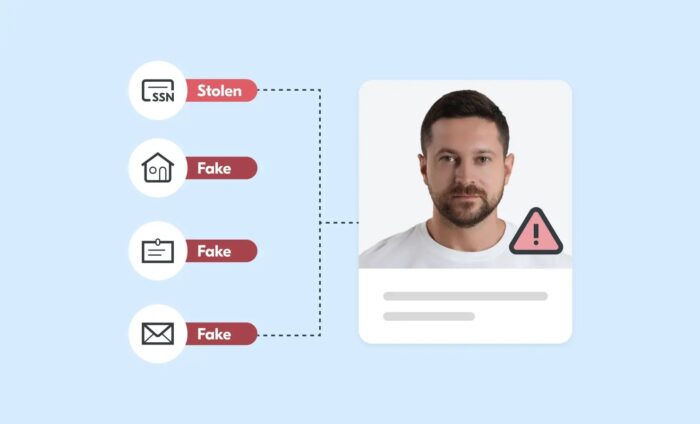
Before diving into credentials, a platform needs to confirm the applicant is real. Many systems ask for:
- A government-issued ID scan (passport, license) and parse its fields.
- A live selfie or short video clip to match the face to the ID via facial recognition.
- SMS or email verification to confirm control of contact channels.
- Device fingerprinting and IP reputation to detect reused hardware or anonymized networks.
These combine into a risk score for identity authenticity. If discrepancies arise-say, a mismatch between facial image and ID-the system escalates the case for manual review.
This layered approach thwarts impersonation and synthetic identities (nonexistent people built from data).
However, identity verification must remain friction-aware: too many hurdles risk losing genuine applicants. Many platforms employ progressive gating, doing minimal checks early and only introducing heavier ones when anomalies appear.
Authenticating credentials and employment history
Once identity is tentatively confirmed, the next task is validating claims: education, work history, certifications. Methods include:
- OCR parsing and metadata checks on submitted documents for tampering.
- Integration with credential databases or registries to verify issuance.
- Payroll or HR-system integrations (with candidate permission) for employment verification.
- Direct reference or employer outreach when automated checks flag uncertainty.
Platforms aggregate a trust score based on consistency, document quality, third-party confirmation, and timing.
Claims with gaps, overlapping periods, or unverifiable credentials are flagged. In sectors with rigorous licensing (engineering, healthcare), real-time registry checks may confirm current license status.
Some platforms also use background checks as a complement-but be aware: such checks often contain errors. One study found over half the cases had at least one false-positive error in background reports.
| Verification source | Strength | Limitation |
| Credential database APIs | Fast, scalable | Incomplete coverage in some regions |
| Payroll/HR system connect | Direct employer data | Requires candidate permission, access |
| Manual employer verification | Human validation | Time-consuming, costly |
This hybrid approach improves reliability while controlling cost.
Parsing content and catching anomalies in applications

Even when identity and credentials check out, the content of the application can betray fraud. Platforms apply:
- Resume parsing using NLP models to structure experience, skills, education.
- Cross-field consistency checks (e.g., no overlapping jobs, plausible promotions).
- AI fraud detectors that spot overly polished or template-generated language.
- Behavioral or questionnaire consistency (e.g. time spent answering vs. expected norms).
- Plagiarism or similarity scans across prior submissions.
For example, an AI detector might flag a cover letter that’s too uniform across sections or mirrors large web corpora. And behaviorally, a candidate who spends just seconds per question may seem suspicious.
The content analysis layer ensures the story matches the identity and credentials.
These layers help reduce resume fraud, which a 2025 survey revealed 44 % of respondents admitted (24 % falsified resumes specifically).
Monitoring behavior and ongoing validation
Verification does not stop once the applicant is shortlisted. Platforms continue validating via:
- Proctored video interviews: lock browser tabs, monitor gaze or face match.
- Engagement metrics: real users tend to revisit, respond to messages, tweak submissions.
- Cross-application signal correlation: same device, IP, or writing style across accounts may indicate fraud rings.
- Post-hire audits: checking whether identity and performance align with claims.
- Continuous revalidation: for long-term or contract roles, re-checking credentials or behavior periodically.
These ongoing layers help catch impersonation after hire or detect anomalies later. Real candidates naturally engage and evolve their profiles; fraudulent ones often display shallow, bursty behavior. Monitoring beyond hire helps suppress fraud and recalibrate models over time.
Balancing friction, ethics, and regulatory constraints
Strong verification must cohere with fairness, privacy, and regulation. Key challenges:
- User friction – Too many steps discourage genuine applicants. Many platforms stage checks progressively, only escalating when risk is detected.
- Bias and fairness – Facial recognition or AI models can misperform across demographics. Human review and auditability are essential.
- Privacy and consent – Laws like GDPR require explicit consent, data minimization, and user rights (access, correction, deletion).
- False positives and disputes – Legit candidates may get flagged. Platforms must allow appeals and human review.
- Coverage gaps – Verification APIs may not cover every region or institution. Fallback methods (manual) remain necessary.
Striking the right balance ensures trust without alienating real users, and compliance without overreach.
Emerging technologies reshaping applicant verification

A new frontier is blending decentralized identity, blockchain, and federated trust. For instance:
- Blockchain-anchored credentials allow institutions to issue tamper-proof certificates any verifier can validate.
- Decentralized identity (DID) systems let applicants pre-verify identity attributes with trusted issuers, then share proofs with platforms.
- Federated verification networks enable platforms to share trust signals (e.g. candidate has been cleared elsewhere).
- Adaptive ML models continually retrain on flagged vs accepted cases to detect evolving fraud tactics.
These innovations promise lower friction, shared trust, and more robust fraud resistance. However, adoption remains limited so far. Implementation challenges include standards, infrastructure, and global interoperability.
Final Thoughts
In summary, verifying real applicant submissions on job platforms requires a layered, evolving approach. Identity checks, credential validation, content analysis, behavioral monitoring, compliance vigilance, and new trust technologies all intertwine.
Each layer may be imperfect alone, but together they form a resilient net. For platforms competing in hiring quality, embedding these verification systems is no longer optional, it is essential to protect reputation, reduce waste, and maintain trust in the digital hiring process.